Note: The text below is an overview of a patent disclosure (CN202157754U). Pressure, load, and depth figures refer to parameters claimed in the patent and are not universal LEISA acceptance criteria or a test method.
1. Technical background and need
Glass-fiber-reinforced plastic (FRP/GRP) pipelines have been used in oil and gas since the 1950s and have shown clear advantages in high-pressure service. Developed markets, notably the United States, introduced filament-wound high-pressure GRP pipe earlier and expanded its use over time.
Many oilfields in China long relied on steel pipe: under corrosive fluids, service life was often estimated at about 3–5 years (a typical industry figure in the source material). FRP is considered an alternative for downhole lines because of corrosion resistance, a longer service-life orientation (15–20 years in the same source), and favourable mechanical properties.
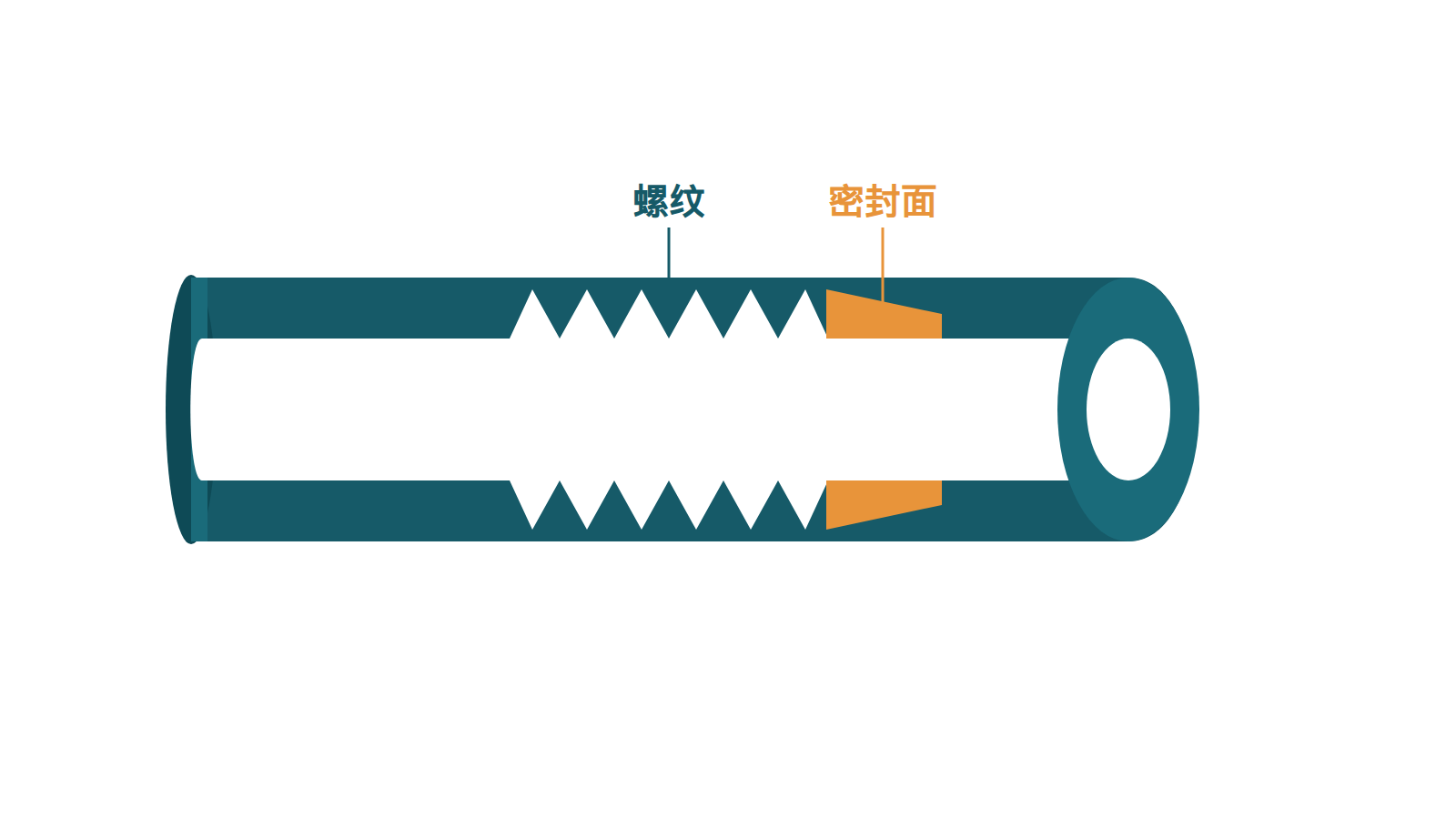
High-pressure FRP pipe still faces bottlenecks: bonding at the FRP–metal interface, internal/external pressure instability, tight OD constraints relative to casing, and complex forming. The patent proposes a high-pressure joint for downhole oilfield use.
2. Claimed technical features of the invention
The design goal is a high-performance, corrosion-resistant, relatively simple high-pressure FRP joint oriented to production and water-injection needs in deep wells. Orientations stated in the patent include:
- Pressure capacity: simultaneous internal pressure on the order of 35 MPa and external pressure on the order of 15 MPa (as claimed in the patent).
- Axial tension: strength on the order of 600–1000 kN (as claimed).
- Temperature: suitability around 100 °C (as claimed).
- Corrosion: orientation to media containing hydrogen sulfide, carbon dioxide, and similar agents.
The depth envelope 2000–7000 m in the patent text is a claimed design target, not LEISA field data and not a guarantee for any product.
3. Technical solution and structure
Main elements:
- FRP intermediate body — liner, inner and outer anti-permeation layers, and a structural layer for strength, sealing, and impermeability.
- FRP end connectors — at both ends of the pipe, joined to the intermediate body.
- Embedded metal connector — a steel tube embedded in the FRP connector, with connecting bosses to improve adhesion and structural stability.
Problems the design seeks to ease:
- FRP–metal interface: pin-type embedded metal connector; a high-elongation liner reduces deformation mismatch.
- Internal/external pressure instability: a high-strength, high-seal liner against leakage under pressure swings.
- Stiffness and buckling resistance: stiffness-coefficient optimisation for high pressure and temperature.
- Forming: continuous winding aimed at a more integral FRP-to-steel connector.
4. Implementation (per the patent description)
- Materials: high-strength epoxy resins, fibre reinforcement, high-elongation liner.
- Winding: CAD-assisted optimisation of lay-up position and wind angles for structural continuity.
- Steel connector embedment: mould pressing and heat cure to establish the interface.
- Pressure testing: finished goods undergo hydrostatic and cyclic fatigue tests under the manufacturer/specification programme — acceptance criteria are set by contract, not by this overview.
5. Claimed advantages and outlook
Relative to traditional approaches, the patent claims:
- broader optimisation of strength, stiffness, pressure, and temperature capability for deep-well duty (production, injection, insulation, and related uses);
- a marked gain in corrosion resistance and service life versus steel (the text cites an orientation of “4–5× longer” — a patent-description claim, not an independent LEISA measurement);
- easier running thanks to OD optimisation for casing clearance.
6. Development potential
The joint technology is one path toward more reliable and economical deep-well solutions. Further materials and manufacturing progress may extend impact resistance, monitoring options, and temperature range; adjacent domains include gas transport, geothermal wells, and chemical piping.
7. Closing
The patent’s design and process innovations target pain points of high-pressure FRP joints in harsh service and aim to improve reliability of downhole FRP tubing. For purchasing and acceptance, rely on the contract, applicable standards, and independent tests — not on the patent description alone.
Source: https://patents.google.com/patent/CN202157754U/zh
FAQ
Is this a standard or a patent?
A construction patent. It does not replace API Spec 15HR / 15LR, ISO 14692, or regional rules.
Can patent figures be used as lot acceptance criteria?
No. Acceptance follows the contract and agreed test methods.
Are independent joint tests needed?
For high-pressure downhole service, independent checks of the interface and pressure behaviour usually reduce information asymmetry between supplier and buyer.
Does LEISA certify this patent?
No. LEISA provides independent testing and reports; it does not endorse or certify patent claims.
Where do pressure ratings for a real purchase come from?
From the product specification and the standard named in the contract — not from this overview.
Related reading:
- API 15HR deep dive
- How to evaluate whether FRP downhole oil pipes are qualified
- Why third-party testing: first principles
- Filament-Wound FRP Pressure Pipe Testing Services
- Contact us
Author: Simon Su | LEISA.COM | info@leisa.com