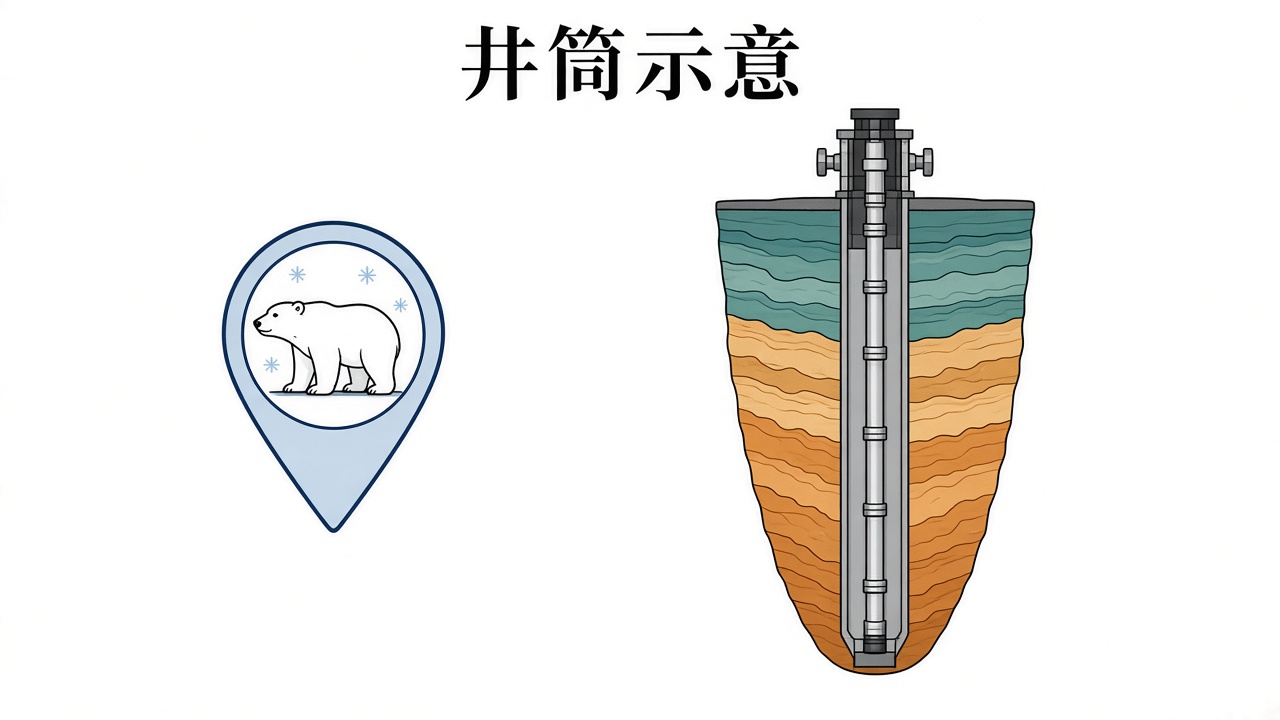
FRP downhole tubing is gaining use worldwide for corrosion resistance, high specific strength, and long service life. Russia is a major oil producer; complex geology and harsh climate place high demands on downhole pipe. Below is an overview of advantages, typical applications, challenges, and development directions. The language stays at a general wellbore level; specific depths and field KPIs are not invented here.
1. Advantages of FRP downhole tubing
-
Corrosion resistance
Well fluids often contain hydrogen sulfide, carbon dioxide, and other aggressive components. Metal tubing corrodes and shortens life in such service. The non-metallic nature of FRP gives good resistance to acids, alkalis, and salts and can extend string life. -
Low mass at high strength
FRP density is often estimated at about one-quarter that of steel while remaining competitive on several strength metrics — which simplifies transport, installation, and maintenance and can reduce work intensity. Exact mass and dimensions follow the product specification. -
Low thermal conductivity
In cold climates, low thermal conductivity helps cut heat loss from well fluids and maintain flow temperature — a factor that can affect production efficiency depending on well regime.
2. Typical applications on Russian wells
In recent years FRP downhole tubing has been increasingly considered for:
- Water injection and production — where corrosion and strength matter, especially with H₂S and CO₂.
- High water-cut fields — resistance to corrosive ions in water; potential to lower maintenance cost.
- High-temperature / high-pressure wells — only when the product is specifically designed and verified by testing for the pressure/temperature/media envelope.
Exact application choice always follows the well project and contract specification.
3. Challenges
-
Extreme climate
Some fields sit in severe frost regions. Low temperature can affect impact toughness and composite strength; targeted material modification and qualification tests for the climate envelope are needed. -
Connection technology
FRP joining differs from steel tubing. Ensuring sealing and strength at the joint is a key installation and operating issue. -
Norms and practice
The regulatory and industry base for downhole FRP tubing in Russia continues to develop. Practice draws on international documents (e.g. API Spec 15HR) and national/industry norms (including the GOST / TU 2296 family for related GRP pipe), adapted to project conditions.
4. Development directions
- R&D — FRP behaviour at low temperature and high pressure; products tailored to Russian field conditions.
- Norms — national application rules that blend international experience with real field requirements.
- Localised production — shorter logistics and faster market response (a strategic trend, not a LEISA market-share forecast).
- Personnel training — installation, maintenance, and inspection skills to cut field-error risk.
5. Closing
FRP downhole tubing on Russian wells has clear potential thanks to corrosion resistance and handling convenience. Climate and geology demand careful design, qualification, and joint control. Sustainable growth depends on R&D, clear norms, and competent installation — paired with verifiable tests, not marketing claims alone.
FAQ
Does FRP replace steel on all Russian wells?
No. Material choice follows media, pressure, temperature, string mechanics, and life-cycle economics.
Which documents are commonly reviewed?
API Spec 15HR and related practices; for some GRP systems — GOST R 53201, TU 2296, and the operator’s project specification.
Are climate tests needed?
For Arctic and near-Arctic conditions, buyers usually require property confirmation at low temperature — scope is set by contract.
Can LEISA help with independent verification?
Yes — independent testing of filament-wound FRP pressure pipe; LEISA does not sell pipe.
Are field depths or production KPIs implied by this article?
No. Depths and field KPIs must come from the well project and measured data — not from this overview.
What is the first risk to manage in cold-climate installs?
Joint sealing and low-temperature toughness of the composite — both need qualification against the project climate envelope.
Related reading:
- GOST / TU 2296 GRP pipe specification
- API 15HR deep dive
- API RP 15TL4 — care and use
- How to choose an FRP/GRP pipe testing lab
- Filament-Wound FRP Pressure Pipe Testing Services
- Contact us
Author: Simon Su | LEISA.COM | info@leisa.com