FRP downhole tubing is valued for corrosion resistance, high specific strength, and long service life. To keep quality and field performance aligned with expectations, buyers need control across selection, acceptance, and use. Below is a practical frame: standards anchors, purchasing strategy, and quality measures. It is a buyer guide — not an official acceptance checklist.
1. Lock standard requirements in writing
Buyers should draw on relevant international and regional documents and embed them in the specification and contract.
International references
- API Spec 15HR and API Spec 15LR — design, manufacture, and performance of high- and low-pressure FRP line pipe: pressure ratings, materials, connections.
- API Spec 5B — thread machining and inspection; a basis for joint sealing and consistency.
- API RP 15TL4 — recommended care and use practices that support service life and lower operating risk.
China industry documents (where applicable)
- SY/T 7043-2016 and SY/T 6267-2018 — manufacture, testing, materials, and QC for FRP tubing in China’s oil and gas sector.
- SY/T 6128-2012 — methods to evaluate threaded-joint performance.
Example test methods
- GB/T 3854-2017 — hardness of reinforced plastics.
- GB/T 2577-2005 — resin content (raw-material / composition check).
Clear standard references reduce disputes over vague requirements.
2. Purchasing strategy
Supplier selection
- Reputation, manufacturing credentials, and API/ISO certificates (where claimed).
- Review of process and QMS (e.g. API Q1 or ISO 9001) — ability to produce and control quality.
Contract
- Technical specs, performance targets, inspection methods, and acceptance conditions — in writing.
- Nonconformity handling: return, claims, corrective actions.
Samples and pilot
- Before a large lot — samples for verification testing.
- Where feasible — a limited pilot run to assess real performance.
3. Incoming inspection and acceptance
Appearance
- Cracks, bubbles, delamination, and other surface defects.
- Follow appearance clauses in the named standard (e.g. API Spec 15HR).
Dimensions and specification
- Length, OD, wall thickness, thread dimensions.
- For threads — gauges consistent with API Spec 5B logic.
Performance
- Hydrostatic pressure: leak-tightness at rated pressure (in some China specs — per SY/T 7043-2016; in international projects — per the agreed method).
- Tensile strength and ring stiffness: per agreed methods (including GB/T 3854-type orientations where used).
- Fatigue: cyclic pressure simulating the well regime.
Material verification
- Match supplier material reports (fibre and resin grades) to the contract.
- If needed — measure resin content (e.g. GB/T 2577-2005).
4. Transport and storage
FRP downhole tubing is sensitive to mechanical damage and environment.
- Transport: protected slings and suitable vehicles; avoid impact and abrasion. Handling guidance appears in API Spec 15HR.
- Storage: dry, ventilated warehouse; avoid prolonged direct sun and corrosive agents. Thread protectors on connections; anti-corrosion treatment on metal elements when needed.
5. Monitoring during installation and service
- Installation: follow recommended practices (e.g. API RP 15TL4), including specified makeup torque; photo-record critical nodes for traceability.
- Periodic checks: corrosion/degradation, mechanics, sealing; ultrasound and pressure tests per the operator’s programme.
- Retirement: replace by service life and duty (some sources cite an FRP orientation around 20 years — not a universal guarantee). Dispose of retired pipe through controlled channels.
6. Summary
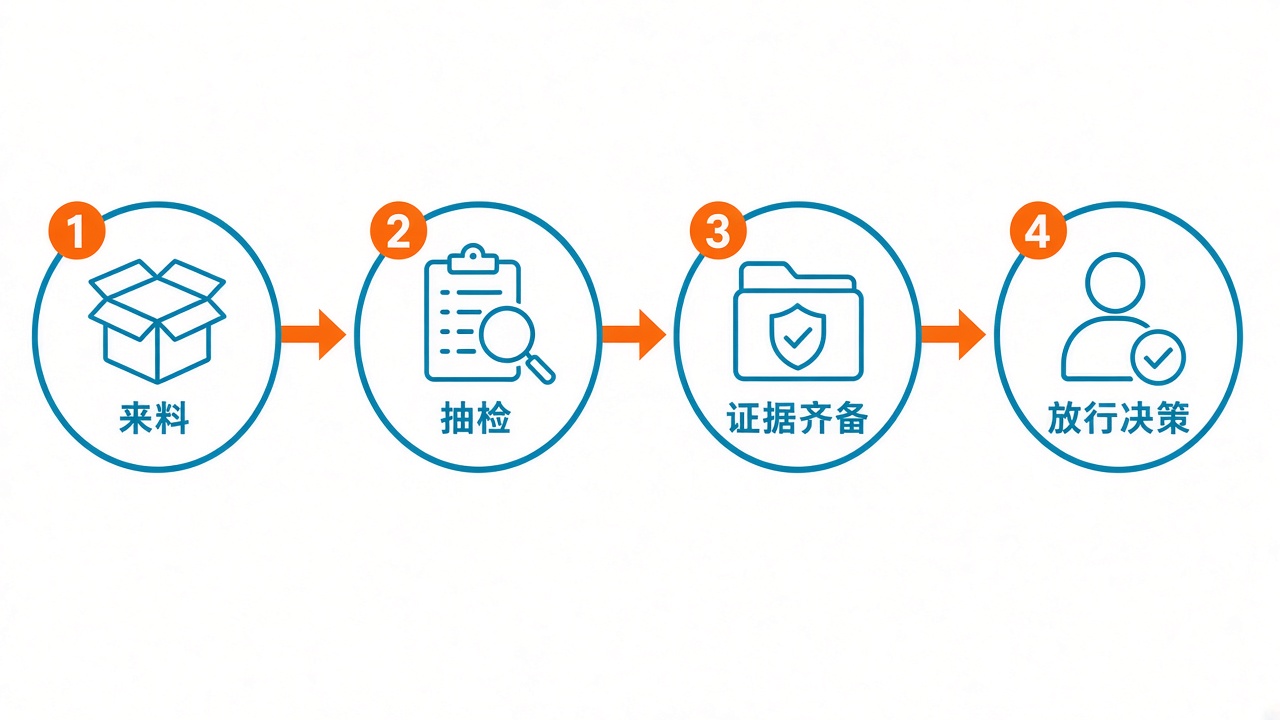
For buyers, FRP downhole-tubing QC is end-to-end: standards in the contract → supplier selection → strict incoming acceptance → transport/storage → installation and operation. The buyer is not only the user but the owner of the evidence chain.
FAQ
Is a mill certificate enough?
It helps, but it does not replace selective independent testing on critical lots.
What should the contract state first?
Applicable standard, pressure/temperature/media envelope, test scope, acceptance criteria, and liability for nonconformities.
Is third-party thread inspection worthwhile?
For high-pressure downhole joints, independent checks of dimensions and sealing often pay off by lowering failure risk.
Does LEISA sell pipe?
No. LEISA does not manufacture or sell pipe; the focus is independent testing and reports.
Where should sample testing start?
With the pressure/temperature/media envelope and joint type named in the contract, then the minimum hydrostatic and dimensional checks that prove those claims.
Can SY/T and API be mixed freely?
Only when the project or regulator requires both. Otherwise pick one primary frame and agree deviations in writing.
Related reading:
- How to evaluate whether FRP downhole oil pipes are qualified
- How to choose an FRP/GRP pipe testing lab
- API 15HR deep dive
- Why third-party testing: first principles
- Filament-Wound FRP Pressure Pipe Testing Services
- Contact us
Author: Simon Su | LEISA.COM | info@leisa.com